
 EN
EN
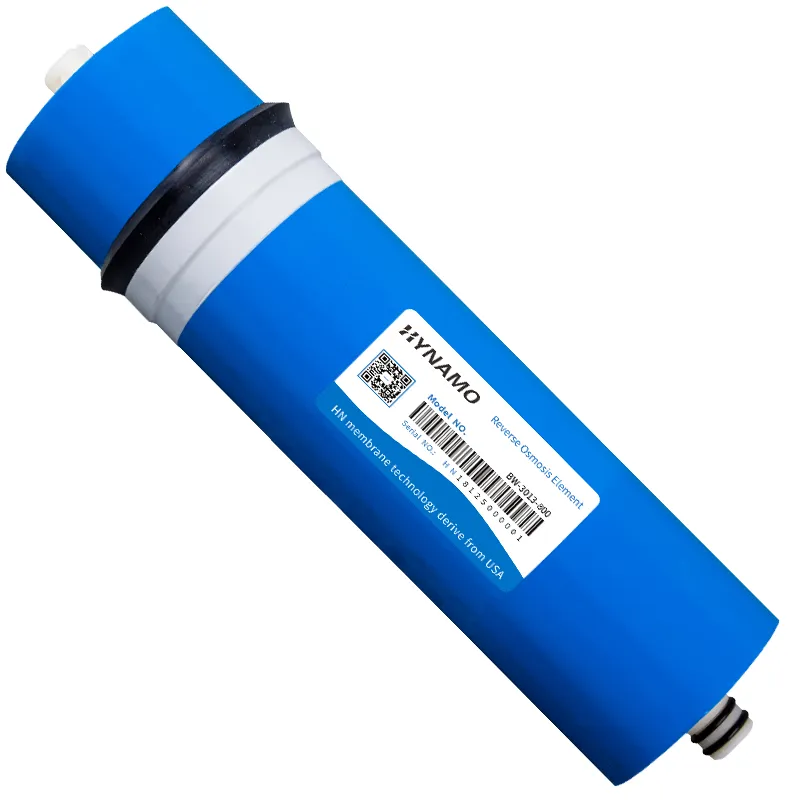
How Seawater RO Membranes Enable High-Efficiency Salt Rejection in Coastal Conditions
Molecular-Scale Separation Mechanism: Thermodynamic and hydraulic principles behind >99.7% salt rejection
A seawater RO membrane operates via solution-diffusion—not simple sieving. Under high hydraulic pressure exceeding seawater’s natural osmotic pressure (~30 bar), water molecules dissolve into and diffuse through the dense, non-porous polyamide layer, while dissolved salts are overwhelmingly rejected. This thermodynamically driven reversal of osmosis enables consistent salt rejection above 99.7%, as confirmed by the American Membrane Technology Association (AMTA, 2023). Multivalent ions (e.g., sulfate, calcium) face dual exclusion—by size and charge—while the membrane’s inherent negative surface charge at neutral-to-alkaline pH repels chloride and other anions, reinforcing performance across variable coastal salinities and temperatures.
Real-World Validation: Sorek Plant’s 624,000 m³/day output powered by 156,000+ seawater RO membrane elements
This molecular precision scales reliably in practice: Israel’s Sorek desalination plant—the world’s largest SWRO facility—produces 624,000 m³/day of potable water from Mediterranean seawater (~40,000 ppm TDS) using over 156,000 seawater RO membrane elements. Its sustained >99.7% salt rejection validates that lab-grade performance translates to long-term, full-scale operation. Crucially, success hinges not only on membrane chemistry but also on integrated hydraulic design: 16-inch spiral-wound elements maximize active surface area per unit volume, reducing footprint and energy demand per cubic meter without compromising rejection or recovery.
Seawater RO Membranes as the Primary Driver of Cost Reduction and Energy Efficiency
Energy Optimization: 32% drop in kWh/m³ since 2010 via low-fouling, high-flux seawater RO membrane innovations
Specific energy consumption for SWRO has fallen 32% since 2010—now averaging 2.5–3.5 kWh/m³ (Global Water Intelligence, 2023)—largely due to advances in low-fouling, high-flux membrane materials. These innovations allow operation at lower pressures while sustaining salt rejection above 99.7%, reducing the work required to overcome osmotic resistance. When paired with high-efficiency energy recovery devices (ERDs) that reclaim >95% of brine stream pressure, modern systems approach theoretical thermodynamic limits. Today’s top-performing spiral-wound modules pack up to 600 ft² of active membrane area, boosting water output per unit energy. The result is measurable OPEX reduction: a large municipal plant can save millions annually in electricity costs compared to systems installed a decade ago.
Lifecycle Economics: Membranes represent only 8–12% of 20-year OPEX but deliver 65% of system efficiency gains
Though membrane replacement accounts for just 8–12% of a plant’s 20-year operating expenditure (IDA, 2022), membranes drive 65% of total system efficiency gains. Their performance directly governs flux, salt passage, cleaning frequency, and pressure requirements. High-quality, durable membranes extend service life to 5–7 years, reduce chemical cleaning cycles, and lower the number of elements needed—cutting both capital and operational costs. In contrast, lower-cost membranes often increase energy demand by 15–20% and require more frequent replacement, eroding lifecycle savings. For coastal utilities and industrial users facing tariff sensitivity, prioritizing membrane selection and proactive fouling management enables levelized water costs below $0.50/m³—making desalination a financially sustainable solution in arid regions.
Balancing Durability, Fouling Resistance, and Boron Removal in Coastal Seawater RO Systems
Fouling–Flux Trade-Off: Why biofouling and scaling challenge long-term seawater RO membrane performance
Seawater RO membranes confront an inherent tension between high initial flux and long-term fouling resistance. Biofouling—microbial biofilm formation—and inorganic scaling (e.g., calcium carbonate, gypsum) degrade permeate output, raise feed pressure, and increase cleaning frequency. Autopsy studies show biofilm accumulation can reduce normalized flux by 30% or more within months (PMC, 2021), particularly in warm, nutrient-rich coastal intakes. While manufacturers enhance hydrophilicity and surface smoothness to suppress fouling, these modifications often modestly reduce starting permeability. Successful operation therefore depends on selecting membranes engineered for balanced performance: sufficient flux to meet production targets, coupled with robust resistance to the aggressive biological and scaling conditions typical of nearshore seawater sources.
Design Integration: How 2-pass and split-stream membrane arrays ensure boron compliance and recovery optimization
Boron removal presents a unique challenge: at seawater pH (~8.1), boron exists primarily as uncharged boric acid, which passes through RO membranes with only ~93% rejection—insufficient for drinking water standards (<0.5 mg/L). Two-pass and split-stream configurations resolve this without sacrificing recovery or energy efficiency. In a two-pass system, raising the pH of the second-pass feed to 10–11 converts boric acid to negatively charged borate, increasing rejection to >99%. A split-stream design refines this further: only a fraction of first-pass permeate undergoes pH adjustment and second-pass polishing, minimizing caustic use and energy input. The polished stream is then blended back to meet boron targets across the full product flow. This integrated approach—leveraging membrane performance, feed chemistry, and system architecture—ensures reliable compliance under fluctuating coastal conditions while preserving high water recovery and energy efficiency.
FAQs
What is the primary mechanism by which seawater RO membranes reject salt?
Seawater RO membranes rely on a solution-diffusion mechanism. Under high hydraulic pressure, water molecules dissolve into and diffuse through the membrane's dense polyamide layer, while salts are rejected due to size and charge exclusion.
Why is energy efficiency crucial in seawater desalination?
High energy efficiency reduces operating expenses for desalination plants. Modern seawater RO membranes, combined with energy recovery devices, have reduced energy consumption by approximately 32% since 2010, saving costs and approaching theoretical efficiency limits.
How do seawater RO membranes contribute to cost reduction in desalination plants?
Innovative membrane materials enable lower energy consumption and higher efficiency. Membranes also minimize salt passage and cleaning frequency, extend service life, and reduce overall operational and capital costs, leading to significant savings over time.
What challenges do fouling and scaling present, and how are they managed?
Biofouling and scaling degrade membrane performance by reducing flux and increasing pressure and cleaning needs. To counter these effects, manufacturers enhance membrane hydrophilicity and surface smoothness, aiming for balanced performance between flux and fouling resistance.
How is boron removed from seawater to meet drinking water standards?
Boron exists as boric acid in seawater, which is difficult to reject. Two-pass and split-stream membrane configurations, involving pH adjustments and selective polishing, help achieve boron levels below 0.5 mg/L while optimizing energy use and recovery.
Table of Contents
- How Seawater RO Membranes Enable High-Efficiency Salt Rejection in Coastal Conditions
- Seawater RO Membranes as the Primary Driver of Cost Reduction and Energy Efficiency
- Balancing Durability, Fouling Resistance, and Boron Removal in Coastal Seawater RO Systems
-
FAQs
- What is the primary mechanism by which seawater RO membranes reject salt?
- Why is energy efficiency crucial in seawater desalination?
- How do seawater RO membranes contribute to cost reduction in desalination plants?
- What challenges do fouling and scaling present, and how are they managed?
- How is boron removed from seawater to meet drinking water standards?