 EN
EN

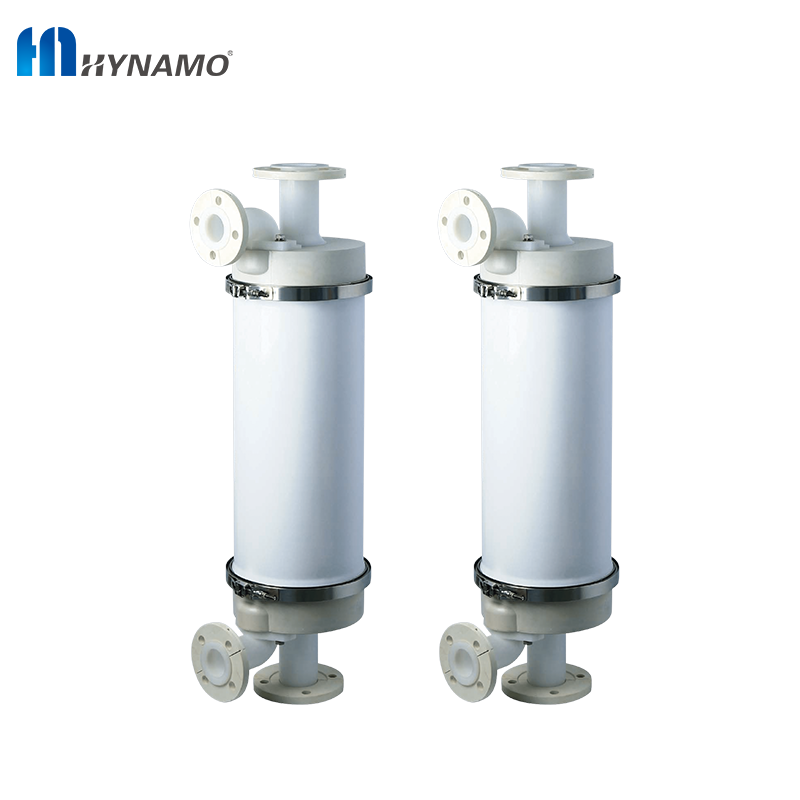
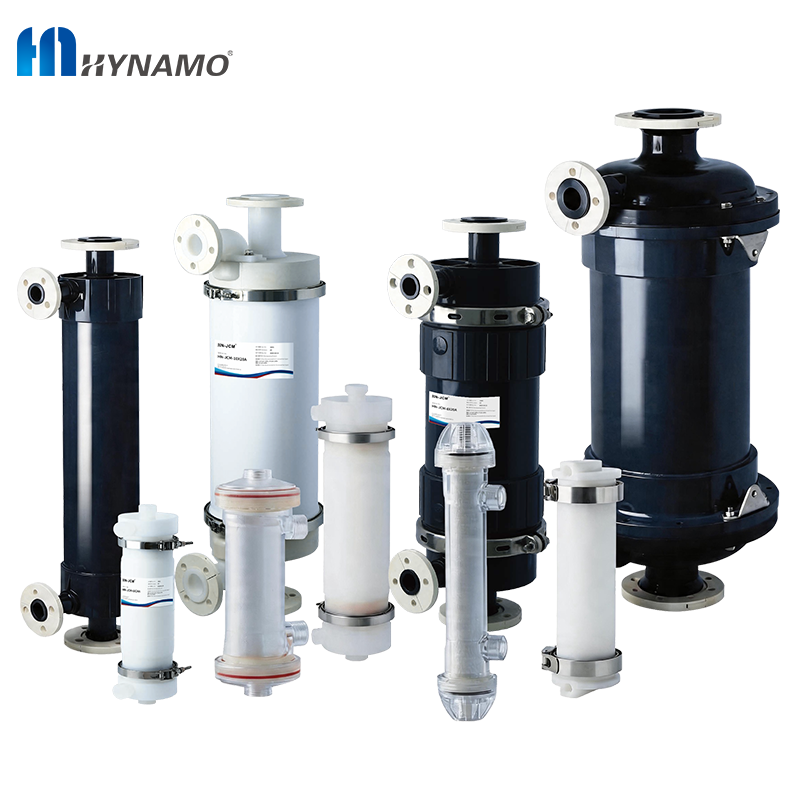
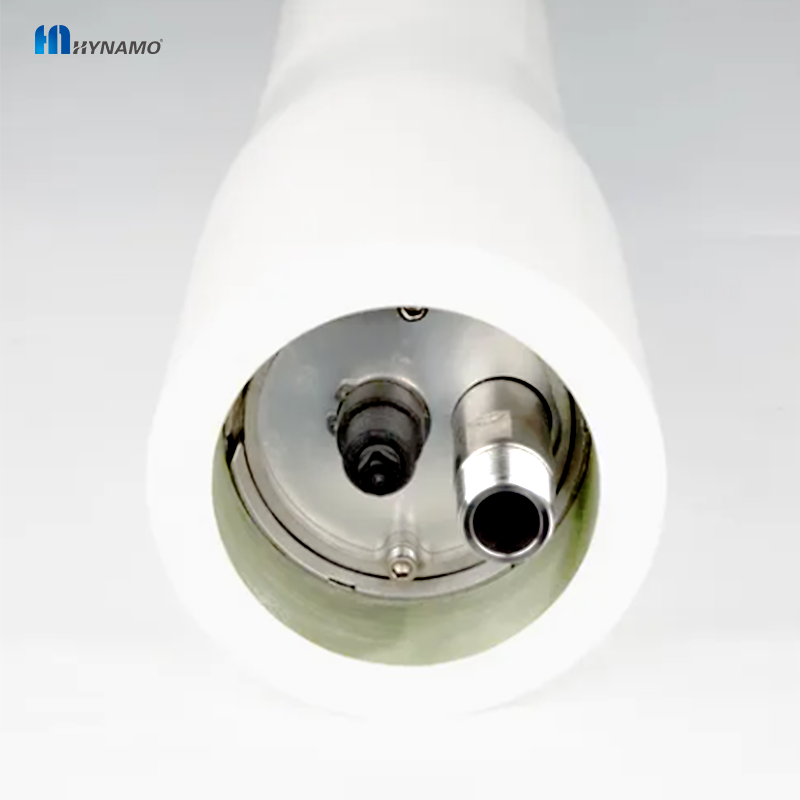
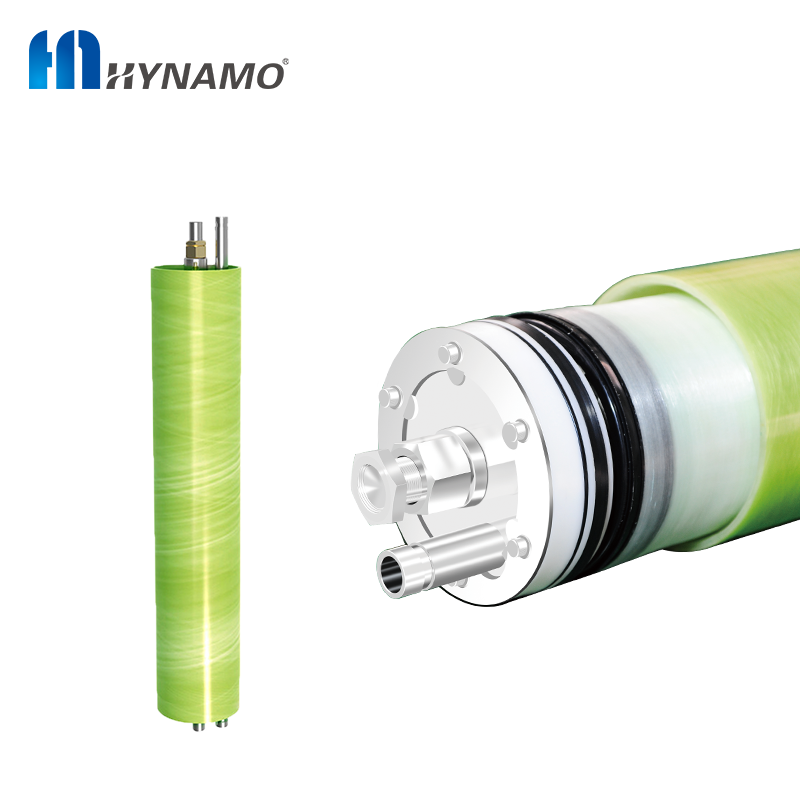
Degassing membrane module HNJC-14x28
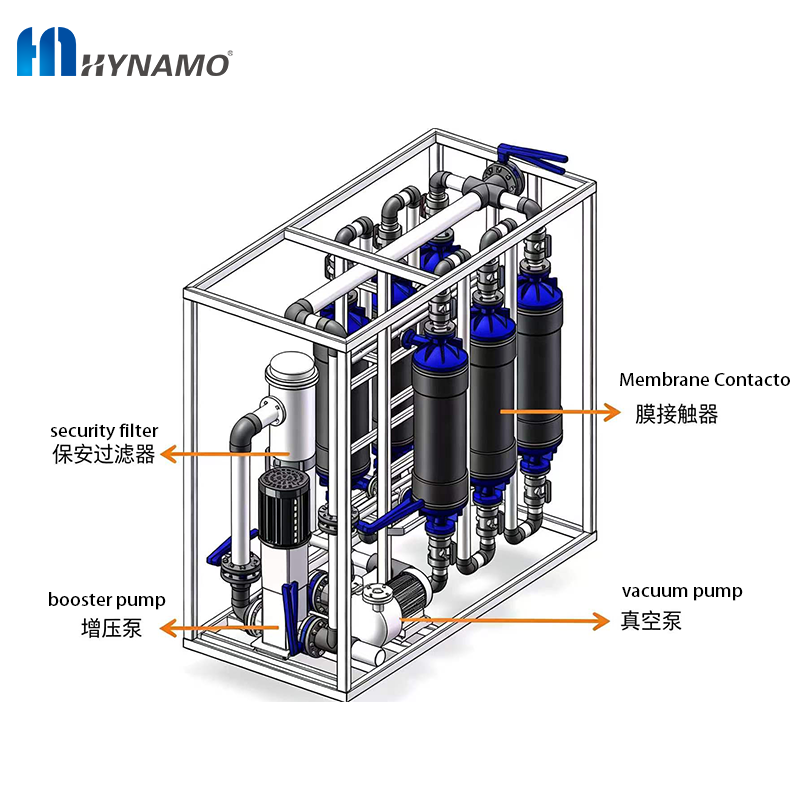
Degassing membrane technology is now widely applied in wastewater ammonia removal, high-purity water deoxygenation, and carbon dioxide stripping. It can reduce ammonia nitrogen (NH3) in water to as low as 1 ppm, oxygen (O2) to 1 ppb, and carbon dioxide (CO2) to 1 ppm. The membrane module incorporates patented structural designs such as woven configuration, central tube water distribution, and baffle plates. These innovations enable an external mass transfer coefficient that is more than three times higher than that of bundled membrane filament arrangements, while reducing membrane material usage by over 50% compared to similar products. This technology achieves high-precision separation and gas purification unattainable by traditional tower-based gas-liquid separation methods, such as reducing dissolved carbon dioxide (CO2) concentrations in water to below 1 ppm.
- Overview
- Product Features
- Product Specifications and Material
- Flow Curve
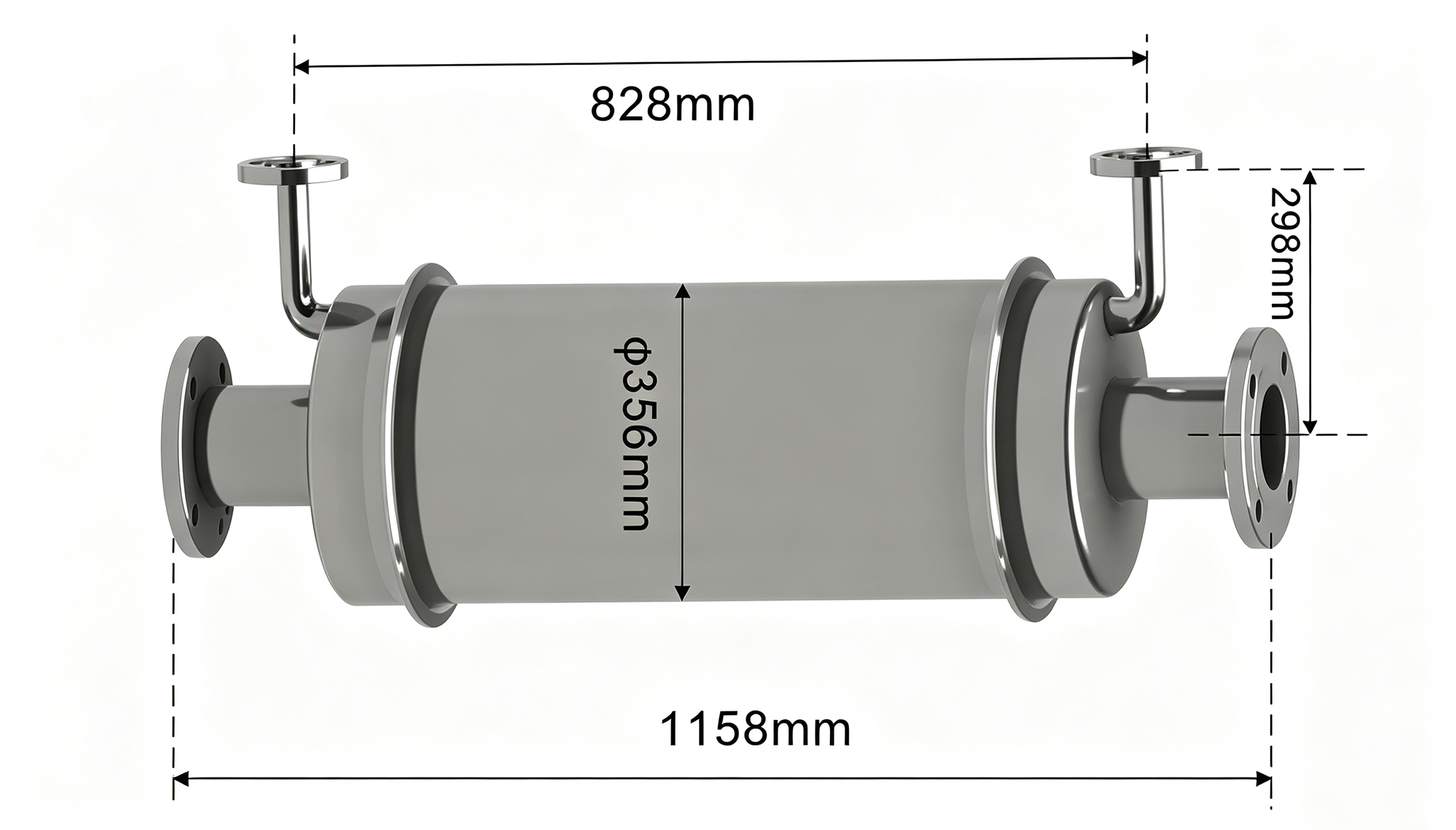
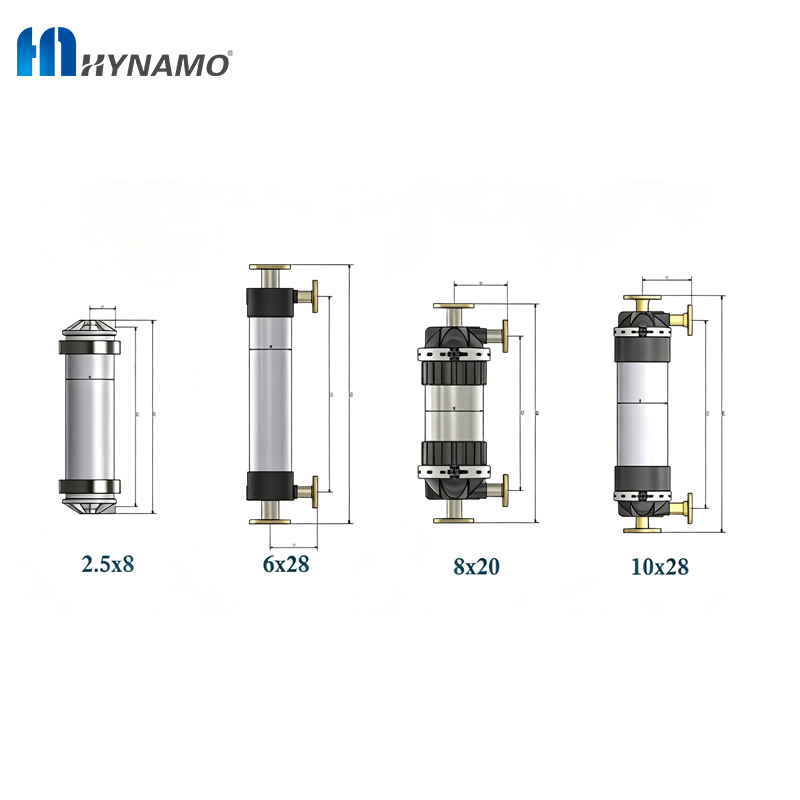
- Product Size
- Recommended Products
Degassing membrane technology is now widely applied in wastewater ammonia removal, high-purity water deoxygenation, and carbon dioxide stripping. It can reduce ammonia nitrogen (NH3) in water to as low as 1 ppm, oxygen (O2) to 1 ppb, and carbon dioxide (CO2) to 1 ppm. The membrane module incorporates patented structural designs such as woven configuration, central tube water distribution, and baffle plates. These innovations enable an external mass transfer coefficient that is more than three times higher than that of bundled membrane filament arrangements, while reducing membrane material usage by over 50% compared to similar products. This technology achieves high-precision separation and gas purification unattainable by traditional tower-based gas-liquid separation methods, such as reducing dissolved carbon dioxide (CO2) concentrations in water to below 1 ppm.
Product Features
1.Exceptional hydrophobic characteristics
The degassing function of the membrane is guaranteed by its hydrophobic properties. However, after prolonged operation in water, the membrane pores may gradually become hydrophilic, leading to water infiltration, disruption of the gas-liquid interface, and eventual loss of separation efficiency. Through specialized pore-forming technology, the membrane filaments feature a surface skin layer with a pore size of 5 nm and a controllable thickness ranging from 0.1 to 1.5 μm. With highly concentrated pore size distribution and extended hydrophobic longevity, the membrane filaments ensure practical engineering value for degassing applications.
2. Highly engineered filament packing
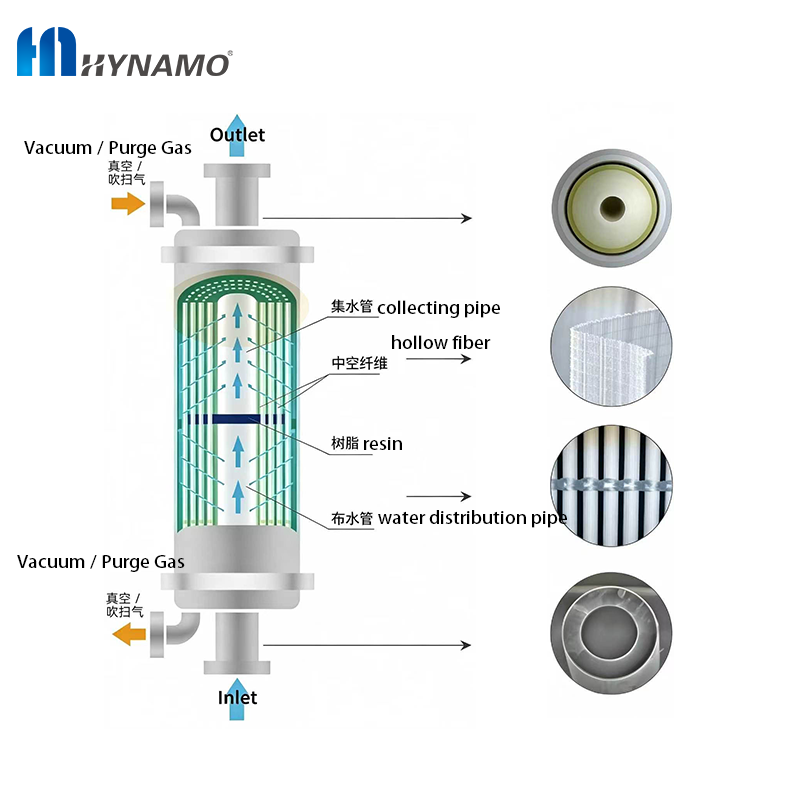
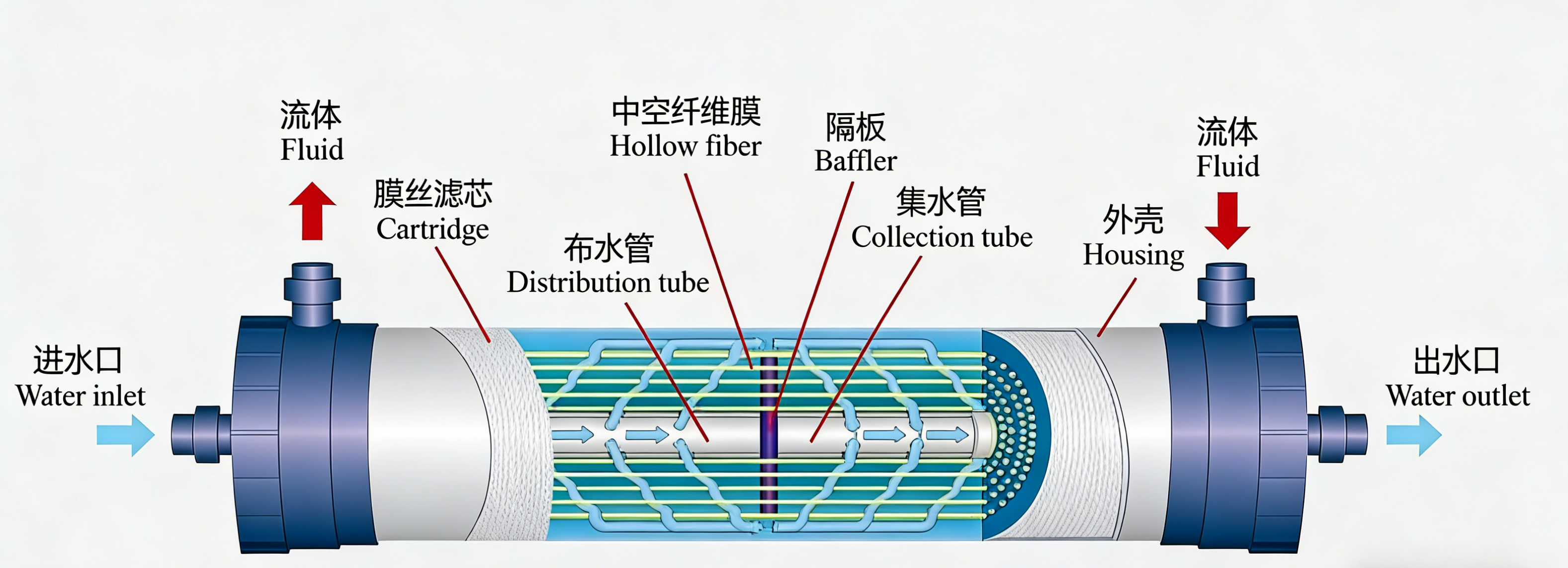
The membrane filament weaving technology involves weaving the filaments into a fabric, which is then wound into a cylindrical module and housed in a shell. This technique significantly expands the effective contact area of the contactor while securely immobilizing each filament to prevent swaying caused by water flow. This design effectively eliminates filament breakage and ensures consistent output water quality from the system.
3. Efficient gas-liquid contact method
The membrane contactor features a centrally positioned flow baffle and utilizes a central tube for water distribution. This configuration creates a jet-flow pattern of liquid along the membrane filament surface, where the flow direction of the liquid outside the filaments forms a specific angle with the gas flow direction inside them. This design significantly optimizes the flow path and greatly enhances mass transfer efficiency on both the shell side and the tube side.
Product Specifications and Material
| MODEL | HNJC-14X28 | |
| Product specifications | Product Mix | Externally pressurized mode, with liquid flowing through the shell side and vacuum applied on the tube side. |
| Liquid Flow Guidelines | 16-91m3/hr | |
| Membrane Area | 128m² | |
| Maximum Shellside LIQUID Working Temperature/ Pressure | Shell Side:5-50C @ 7.2 bar;70°C @ 2.1 bar Tube Side:25°C @ 6.2 bar | |
| Flange Connections | Liquid Inlet/Outlet: 4-inch flange (GB standard/customizable) Vacuum Port: 2-inch flange (GB standard/customizable) |
|
| Material | Membrane/potting material | PP |
| Membrane Filament Type | X-30/40 | |
| Shell/Housing Material | PVC/Stainless Steel 304 | |
| Potting Material | Epoxy | |
| Gasket Material | FFKM/EPDM/FKM |
·Storage recommendation: For long-term idle periods, the module should be dried and stored under vacuum.
Flow Curve
NOTE:
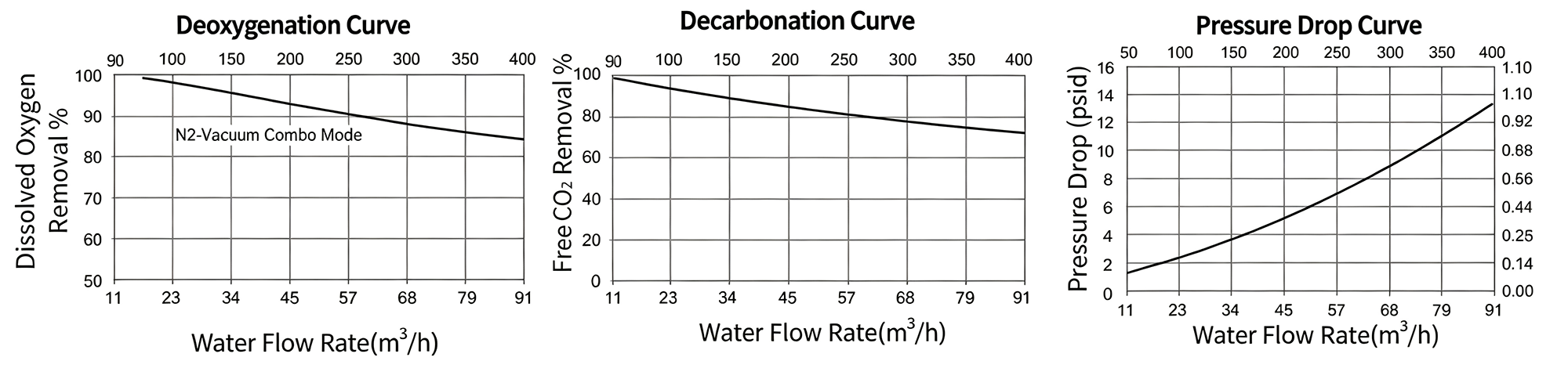
- The pressure drop data shown represents the average performance curve for this membrane contactor model, with individual units varying within ±3% of this average.
- The deoxygenation efficiency data provided reflects the average performance curve for this model, where individual membrane contactors may deviate within ±3% of the average.
- Testing was conducted at 25°C with a vacuum level of 50 torr, using pure water as the test medium.
- All measurements were obtained through DN100 PVC piping, with pressure loss recorded under slightly positive outlet pressure conditions.
Product Size