
 EN
EN
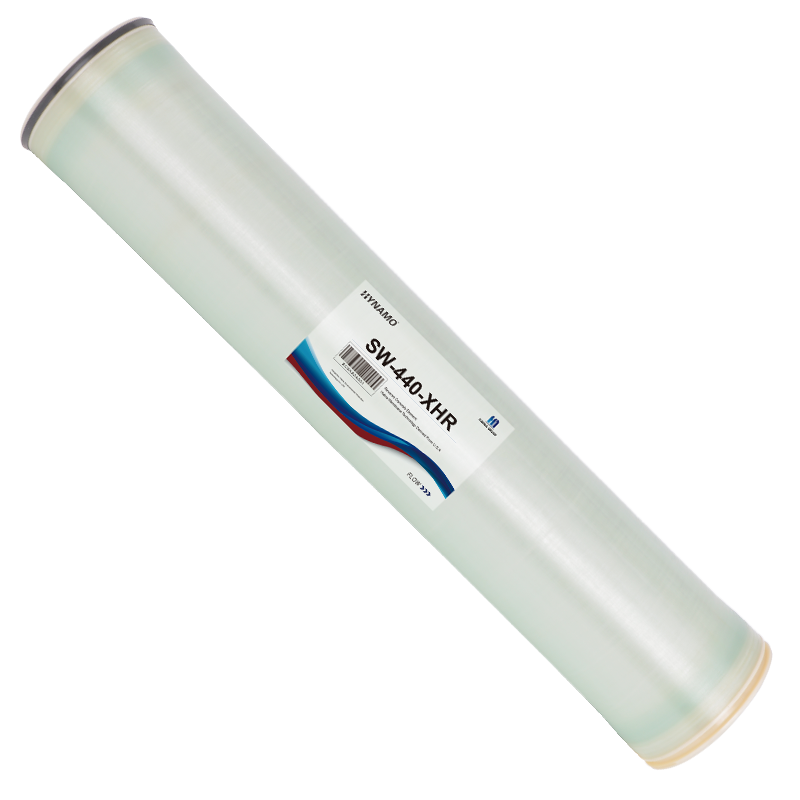
In high-purity water filtration, reverse osmosis (RO) flat sheet composite material is only as reliable as the quality control protocols governing its manufacturing. A single micro-pinhole, improper glue line, or uneven membrane sheet tension can compromise salt rejection rates, cause internal leak bypass, and ruin downstream water output.
To ensure long-term performance stability and batch-to-batch consistency, a high quality ro membrane must undergo a rigorous, multi-stage Quality Assurance (QA) and Quality Control (QC) matrix before packaging and factory dispatch. Understanding these factory testing benchmarks provides B2B buyers, distributor partners, and system integrators with clear technical metrics when evaluating OEM manufacturing reliability.
Raw Material & Substrate Inspection (Pre-Assembly QC)
Before full-scale rolling and automated assembly, each raw material component passes strict incoming quality control (IQC) clearance to guarantee baseline structural stability.
-
Polyamide (PA) Thin-Film Composite Inspection: High-resolution optical scanners verify the uniformity of the active polyamide layer (typically 0.2 microns thick) deposited onto the porous polysulfone support layer, screening for thickness variations, micro-tears, or surface defects.
-
Tricot Spacer & Feed Mesh Alignment: Spacers are measured for uniform thickness and tensile strength to guarantee consistent hydraulic channel height, low pressure drop, and high resistance to chemical degradation during clean-in-place (CIP) procedures.
-
Polyurethane Glue Compatibility: Industrial polyurethane adhesives undergo viscosity and bond-strength testing to ensure non-degrading performance under continuous operating pressure up to 150–300 psi for residential and commercial elements.
In-Line Assembly Integrity & Mechanical Leak Testing
During the automated rolling process, physical integrity tests isolate mechanical assembly faults before wet testing is initiated.
A. Vacuum Decay & Pressure Hold Testing
Prior to preservative chemical treatment or wet testing, dry-wound membrane elements undergo automated vacuum decay testing:
-
The permeate core tube is sealed and subjected to a precise vacuum draw or positive dry nitrogen pressure.
-
The pressure rate-of-change (ΔP / Δt) is monitored via digital pressure transducers over a fixed dwell time.
-
Pass Criteria: Any pressure loss exceeding strict threshold limits indicates an outer seal fail, glue line gap, or core-tube adhesive fracture, triggering immediate automated line rejection.
B. Dimensional & Concentricity Verification
Automated laser measurement systems verify outer diameter (OD), total length, permeate tube alignment, and end-cap symmetry. This ensures seamless fitment into standard residential membrane housings (such as 1812, 2012, or 3012 form factors) without bypass risk around the lip seal.
Wet Performance Testing (100% Factory Batch Testing)
Full operational validation requires actual wet testing under standardized laboratory baseline conditions. Unlike low-tier suppliers using spot sampling, high-precision manufacturers test 100% of manufactured elements or operate under strict AQL 0.65 batch sampling rules.
| Test Parameter | Standard Test Condition (2,000 ppm NaCl Solution) | Pass/Fail Benchmark | Primary Quality Indicator |
| Salt Rejection Rate | 60–70 psi net pressure, 25°C, pH 7.5 | ≥ 97.0%–98.5% (Standard) / ≥ 99.0% (High-Spec) | Polymer layer density & interfacially polymerized film integrity |
| Permeate Flow Rate (GPD) | Rated baseline pressure (50 GPD / 75 GPD / 100 GPD / 400 GPD) | Nominal GPD ± 15% | Active membrane surface area & flux distribution balance |
| Recovery Rate | 15% standard single-element yield | Target Specific Ratio | Hydraulic efficiency & feed channel cross-flow design |
| Differential Pressure (ΔP) | Feed to concentrate pressure drop | < 3–5 psi per element | Feed mesh channel clarity & uniform spacer wrap tension |
Microbiological Safety & Vacuum Packaging Standards
Once wet testing is complete, the membrane must be preserved to prevent microbial growth, oxidation, and structural membrane drying during international shipping and long-term warehouse storage:
-
Food-Grade Chemical Preservation: Elements are flushed with an NSF-approved food-grade sodium bisulfite (NaHSO3) or glycerin-based preservation solution to prevent biological fouling and maintain pore structure elasticity.
-
Vacuum-Sealed Composite Packaging: The processed element is enclosed in high-barrier vacuum foil packaging with oxygen absorber pouches. This preserves seal flexibility and guarantees a minimum shelf life of 24 months under proper storage conditions.
-
Traceability & Serial Code Identification: Every single element receives a unique 2D barcode or laser-engraved serial code. This logs the exact raw material batch, production line timestamp, operator ID, and wet-test performance data for complete warranty verification.
Compliance & Certification Benchmarks for Global Supply Chains
To qualify for international distribution and private-label OEM supply chains, high quality RO membranes must achieve verifiable third-party certifications:
-
NSF/ANSI Standard 58: Verified reduction efficiency for total dissolved solids (TDS), heavy metals (lead, arsenic, copper), and fluoride.
-
NSF/ANSI 61 & FDA Title 21 Compliance: Guarantees that all plastic components, outer wraps, end caps, and adhesives meet non-toxic, food-contact safety criteria without chemical leaching.
-
ISO 9001:2015 Manufacturing Standards: Ensures standardized quality management workflows from raw material receipt through final outbound logistics inspection.
For complete product line specifications, wholesale OEM/ODM manufacturing capabilities, and custom system integration guides, visit our comprehensive