
 EN
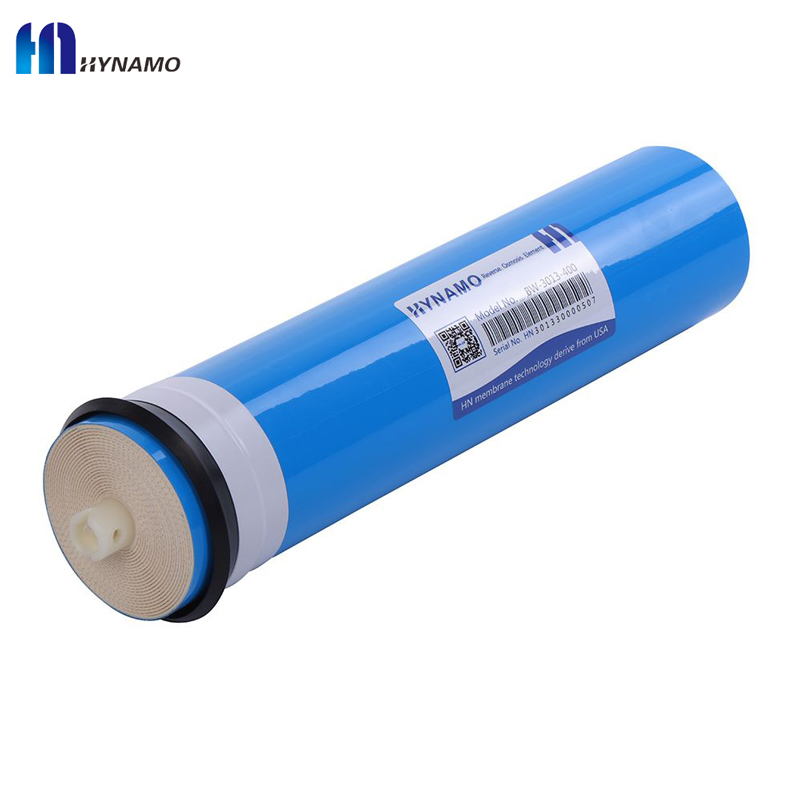
Escalating Water Contamination Drives Higher Rejection & Selectivity in Residential RO Membrane
Rising Microplastics, PFAS, and Heavy Metals in Tap Water
Tap water quality now faces a complex mix of contaminants—microplastics, PFAS, and heavy metals—that exceed the removal capacity of standard point-of-use filters. USGS testing found at least one PFAS compound in about 45% of U.S. tap water samples (2023). Microplastic particles, often smaller than 10 µm, bypass sediment and carbon filtration stages and appear in both municipal and private supplies. Lead and other heavy metals commonly leach into drinking water from corroding pipes, fittings, or service lines—especially in older housing stock. These pollutants create a more demanding feedwater profile for residential reverse osmosis (RO) systems. Unlike adsorption-based filters, RO removes dissolved ions, lead, and larger organics primarily through size exclusion and diffusion. Yet PFAS and microplastics challenge membrane selectivity due to their diverse sizes, surface charges, and polarities. In response, manufacturers are increasing cross-linking density, tightening pore-size distribution, and fine-tuning surface charge—aiming for stable rejection across a broader contaminant spectrum, even amid seasonal shifts or post-repair water quality fluctuations.
How Contaminant Profile Shifts Reshape Rejection Rate Requirements
Today’s contaminant landscape demands more than high TDS reduction—the traditional benchmark for residential RO. Charged heavy metals like lead and arsenic respond well to membranes with strong negative surface charge, enhancing rejection via electrostatic repulsion. In contrast, uncharged PFAS compounds and nano-sized microplastic fragments rely more heavily on precise size exclusion and diffusion kinetics. As a result, no single rejection rate fully reflects real-world performance. While 2024 product sheets cite up to 99.8% salt rejection under ideal lab conditions, actual field performance varies with feedwater temperature, pH, recovery ratio, and membrane age. Innovation now prioritizes consistent rejection of both ionic and neutral contaminants at typical household pressures—balancing selectivity with permeability to deliver safe water without excessive waste, pressure loss, or energy penalty.
Regulatory Evolution Mandates Sustainable Design for Residential RO Membrane
Regulatory pressure is reshaping the residential RO membrane lifecycle—from material selection and energy use to end-of-life disposal. Compliance is no longer optional for market access in Europe and North America.
EU Green Deal and U.S. EPA Enforcement Raising Lifetime & Disposal Standards
The EU Green Deal and the Ecodesign for Sustainable Products Regulation (2024) mandate longer product lifetimes, repairability, and improved recyclability. Simultaneously, the U.S. EPA’s 2024 PFAS National Primary Drinking Water Regulation sets enforceable limits near zero for key PFAS compounds—pushing manufacturers to boost rejection while cutting cartridge waste. A 2023 Eurostat report found that 42% of household water treatment cartridges still end up in landfills within 12 months. To comply, leading suppliers are adopting take-back programs, modular housings, and dry membrane preservation—techniques that extend usable life. One European provider reported a 30% increase in membrane lifespan after switching to dry preservation. Without such adaptations, non-compliant products risk losing EU market access by 2027.
Biodegradable Materials and Low-Energy Operation (<0.5 kWh/m³) as Compliance Essentials
Energy efficiency and material sustainability are now core compliance criteria. The European Commission’s 2024 energy labeling framework targets household water treatment units consuming less than 0.5 kWh/m³. Traditional RO systems typically consume 0.8–1.2 kWh/m³ due to booster pump reliance. To meet this threshold, manufacturers are integrating low-pressure thin-film composite membranes and permeate pumps. Biodegradable components—including polylactic acid (PLA)-based support layers—are entering pilot production in 2025. A 2024 study by a leading research institute found that low-energy residential RO membranes reduce annual electricity use by 45%, saving approximately 60 kWh per household. These advances directly support the EU Green Deal’s circular economy action plan—and help brands avoid emerging energy-related trade barriers.
Consumer Demand for Longevity, Zero Wastewater, and Smart Integration Accelerates Residential RO Membrane Innovation
Consumers increasingly tie RO membrane performance to durability, water efficiency, and intelligent control—not just purity.
Extended Filter Life (>24 Months) and Eco-Mode Adoption (NSF 2024 Data)
Extended service intervals have become a decisive purchasing factor. NSF 2024 data show rising consumer preference for membranes rated beyond 24 months and for eco-mode settings that minimize wastewater. Where traditional membranes required annual replacement, next-generation thin-film composites resist fouling and maintain >95% rejection for 24–36 months—cutting plastic waste and lowering total cost of ownership. Eco-mode reduces the drain-to-permeate ratio from 4:1 to 1:1 or lower, enabled by pump-assisted permeate flush and advanced brine seals. Some leading providers now embed usage-based service timers—triggering replacement alerts based on actual flow rather than calendar time. This extends real-world life by 20–30% in low-contaminant households (NSF 2024), reinforcing consumer perception of longer filter life as both an economic and environmental advantage.
Modular Cartridges and IoT-Enabled Monitoring Enable Seamless Upgrades
Modular cartridge designs let users replace only the RO membrane—or a clogged pre-filter—without discarding the entire housing. This cuts waste and simplifies maintenance. IoT-enabled monitoring adds real-time visibility into TDS, flow rate, and pressure drop, sending predictive alerts when rejection falls below user-defined thresholds. Replacement takes minutes, often tool-free and without plumbing modifications. Smart dashboards track water usage and filter health across multiple units and support over-the-air optimization of flushing cycles and eco-mode schedules. The result is a future-proof platform: customers can upgrade sensors, add larger pre-filters, or integrate a booster pump—all without replacing the core membrane system. This plug-and-play architecture keeps long-term ownership costs predictable, minimizes downtime, and accelerates adoption of connected water appliances—giving homeowners actionable insight into membrane condition and performance.
FAQ
What are the common water contaminants addressed by residential RO membranes?
Residential RO membranes address contaminants such as microplastics, PFAS, heavy metals like lead and arsenic, dissolved ions, and other harmful substances found in tap water.
How do residential RO membranes remove contaminants?
Residential RO membranes use size exclusion and diffusion to remove contaminants. They can reject dissolved ions, larger organic molecules, and certain smaller contaminants like PFAS and microplastics through advanced technologies like cross-linking and fine-tuning pore-size distributions.
What regulatory changes are impacting RO membrane manufacturing?
Regulations such as the EU Green Deal and the U.S. EPA’s 2024 PFAS National Primary Drinking Water Regulation demand longer product lifespans, energy efficiency, reduced waste, and stricter contaminant removal capabilities.
How is consumer demand driving RO membrane innovations?
Consumers are demanding longer filter lifespans, water efficiency (lower drain-to-permeate ratios), and IoT integration features like usage-based service reminders and real-time water quality monitoring.
What is an Eco-mode in RO systems?
Eco-mode reduces the drain-to-permeate water ratio, optimizing water usage. With pump-assisted permeate flush systems, the ratio can drop from 4:1 to 1:1 or lower, cutting water wastage while maintaining performance.