
 EN
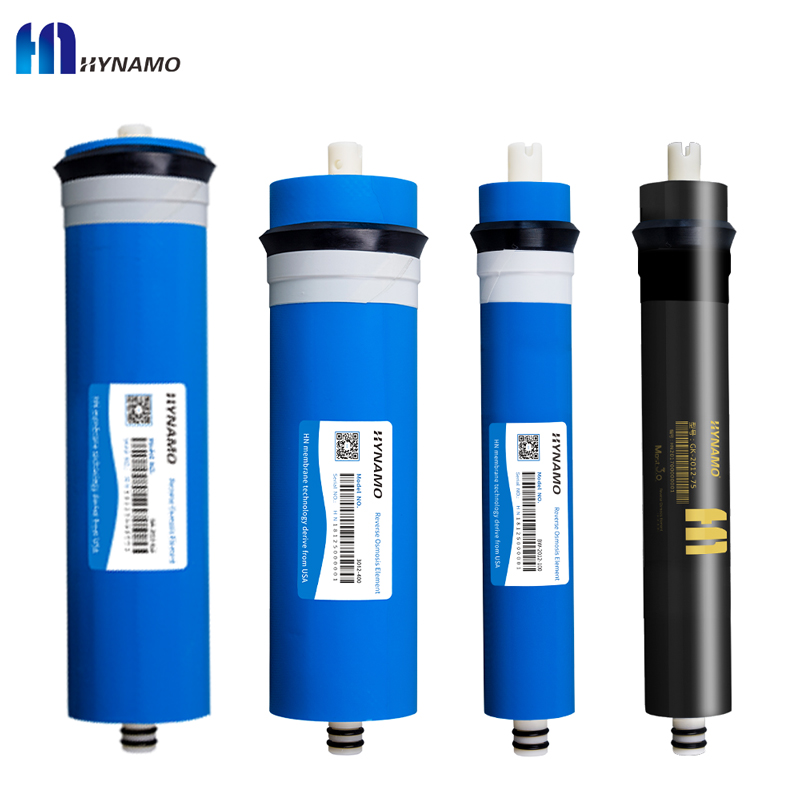
Key Reliability Metrics: Flux, Rejection Rate, and Compaction Resistance
Why membrane failure causes 73% of household RO system downtime
Field service reports consistently show that membrane failure accounts for 73% of household RO system downtime (2024). A reverse osmosis membrane rarely fails without warning—early signs include falling water production, rising total dissolved solids (TDS) in permeate, and increasing pressure drop. Most failures trace to chlorine oxidation, fouling, or physical compaction—not manufacturing defects. Because the membrane is the system’s primary separation barrier, any drop in salt rejection directly degrades water quality. Household systems often lack continuous monitoring, so small changes go unnoticed until output drops sharply. This hidden degradation explains why membrane replacement is the most common repair event. Selecting a membrane with high initial rejection, stable flux, and strong compaction resistance shifts downtime from reactive replacement toward predictable maintenance—enabling users to plan filter changes around measurable performance trends instead of waiting for sudden failure.
How flux stability, salt rejection ≥98%, and compaction resistance predict real-world longevity
Flux measures water output per unit of membrane area per day, typically expressed as gallons per square foot per day (GFD) or liters per square meter per hour (LMH). While high initial flux may appear attractive, excessive flux accelerates fouling and compaction. Stable flux under low-pressure household conditions—typically 40–60 psi—matters more than peak laboratory ratings. Salt rejection should remain at or above 98% for most household feedwater; higher-performing brackish membranes can reach 99.0–99.5% under standard test conditions. Rejection is not static: it declines as feed salinity rises, temperature drops, or recovery increases. Compaction resistance describes how well the membrane retains its physical structure over time. Membranes that compact quickly lose both flux and rejection—even with clean prefilters. A reliable household membrane element combines moderate flux design, ≥98% salt rejection, and low compaction tendency. Monitoring these three metrics together offers a stronger prediction of long-term performance than any single number.
Contaminant-Specific Performance: PFAS, Lead, Nitrates, and Microbial Removal
A reverse osmosis membrane acts as a physical barrier, but contaminant rejection depends on molecular size, charge, and feed pressure. In household systems, priority targets are PFAS, lead, nitrates, and microbial pathogens. Microbial removal typically exceeds 99.9% for bacteria and protozoa; virus rejection requires a certified pore size and an intact membrane.
PFAS rejection realities: Why >99.5% requires certified dual-layer TFC reverse osmosis membrane
PFAS molecules are small, water-soluble, and chemically stable—so standard single-layer polyamide membranes often remove only 90–97% of PFOS and PFOA under normal household pressure. Short-chain PFAS like PFBS pass more readily. Achieving >99.5% rejection requires a certified dual-layer thin-film composite (TFC) reverse osmosis membrane. Its dense second layer blocks low-molecular-weight PFAS while the porous support layer maintains flux. Independent laboratory tests in 2023 showed that dual-layer TFC membranes sustained >99.5% PFOS rejection over 1,500 gallons, whereas standard polyamide dropped to 94% after the same volume. Certification also requires performance retention after specified chlorine exposure and pressure cycling—conditions far more relevant to household use than a single lab sample. Always look for certification that explicitly lists PFAS reduction, ideally against NSF/ANSI 58 or NSF/ANSI 419 criteria.
Lead and nitrate removal under low-pressure (40–60 psi) household conditions
Lead is a divalent cation and is relatively easy for an RO membrane to reject. Under 40–60 psi, a thin-film composite membrane typically removes ≥99% of dissolved lead—even in feed water containing scale or organic matter. Nitrate, by contrast, is a monovalent anion with high solubility, making rejection more pressure-sensitive. At 40 psi, nitrate rejection can fall to 85–88%; at 60 psi, it often reaches 92–95%. To achieve consistent nitrate removal below the EPA’s 10 mg/L maximum contaminant level, choose a membrane rated for >90% nitrate rejection at 50 psi and maintain effective prefiltration to prevent fouling. Field data from 2022 water quality audits found that households using a low-pressure RO membrane with a permeate pump improved nitrate rejection by 6–8 percentage points compared with systems without one.
Material Selection: Polyamide vs. Cellulose Acetate for Household Reverse Osmosis Membrane Durability
Chlorine sensitivity trade-offs: Why standard polyamide demands prefiltration—and how chlorine-tolerant variants change the equation
Standard thin-film polyamide RO membranes deliver high salt rejection and stable flux—but free chlorine or chloramines in municipal water attack the polyamide active layer. Even low residual oxidant levels can break amide bonds, causing irreversible loss of salt rejection and premature failure. Household systems fed by chlorinated tap water therefore require an activated carbon prefilter before the RO membrane. With that protection, polyamide elements often remain reliable for 12 to 18 months. Cellulose acetate membranes offer better inherent chlorine tolerance but typically provide lower salt rejection and greater fouling tendency—making them less common in high-rejection drinking-water systems. Chlorine-tolerant polyamide variants—such as sulfonated polyamide or carbon nanotube-modified polyamide—can withstand prolonged chlorine exposure while retaining permeability and selectivity. These materials shift the trade-off: they reduce dependence on aggressive prefiltration without sacrificing the long-term durability household RO systems demand.
Certification, Testing, and Real-World Validation for Household Reverse Osmosis Membrane Reliability
Certification and real-world testing provide the strongest evidence that an RO membrane will perform reliably in household conditions. Third-party marks such as NSF/ANSI 58 (the standard for point-of-use RO systems) and WQA S-300 verify material safety, structural integrity, and consistent contaminant reduction under standardized protocols. These certifications require at least 75% total dissolved solids (TDS) reduction and a stable permeate flow rate after 24 hours of continuous operation (NSF/ANSI 58, 2024). Without this benchmark, a membrane that performs well in a one-time lab sample may degrade rapidly under daily use. One field audit of uncertified household RO systems found 19% flux loss within the first 90 days—compared with just 5% for certified units (WQA, 2023). That gap translates into higher pumping energy, shorter filter life, and more frequent replacement.
Real-world validation goes beyond initial certification. Reliable manufacturers publish long-term test data under variable feed water conditions—including 40–60 psi pressure swings, chlorine breakthrough, temperature shifts from 5°C to 35°C, and sediment spikes. For example, a 12-month field trial across 200 households in hard-water regions found that membranes tested to NSF/ANSI 58 retained 92% of initial salt rejection at day 365, while non-certified equivalents dropped to 81% (Water Quality Research Foundation, 2023). Such data matters because household water chemistry is never constant: municipal chloramine pulses, well water iron, and seasonal turbidity all challenge membrane integrity.
Look for three validation signals before purchase:
| Validation Signal | What to Look For | Why It Matters |
|---|---|---|
| Certification mark | NSF/ANSI 58 or WQA S-300 on packaging and product listing | Confirms material safety and minimum TDS reduction |
| Performance data sheet | Specific rejection percentages for lead, nitrate, and PFAS | Shows contaminant-specific capability under household pressure |
| Field test reports | Six-month flow and rejection data under variable pressure | Proves real-world longevity beyond lab conditions |
A reverse osmosis membrane that lacks any of these signals may still work initially—but its long-term reliability remains unproven.
FAQ Section
What causes most reverse osmosis membrane failures?
Membrane failures are often attributed to chlorine oxidation, fouling, or physical compaction. Regular monitoring and using certified membranes can prevent sudden failures.
Why is certification important for reverse osmosis membranes?
Certification ensures performance reliability, safety, and compliance with standards like NSF/ANSI 58. It verifies that membranes maintain contaminant rejection and flux stability in real-world conditions.
How can households improve nitrate rejection under low pressure?
Using a low-pressure reverse osmosis membrane with a permeate pump can improve nitrate rejection by up to 6–8 percentage points based on field studies.
What is the benefit of chlorine-tolerant polyamide membranes?
These membranes reduce dependence on aggressive prefiltration and offer durable performance even in chlorinated feed water conditions.
Table of Contents
- Key Reliability Metrics: Flux, Rejection Rate, and Compaction Resistance
- Contaminant-Specific Performance: PFAS, Lead, Nitrates, and Microbial Removal
- Material Selection: Polyamide vs. Cellulose Acetate for Household Reverse Osmosis Membrane Durability
- Certification, Testing, and Real-World Validation for Household Reverse Osmosis Membrane Reliability
- FAQ Section