
 EN
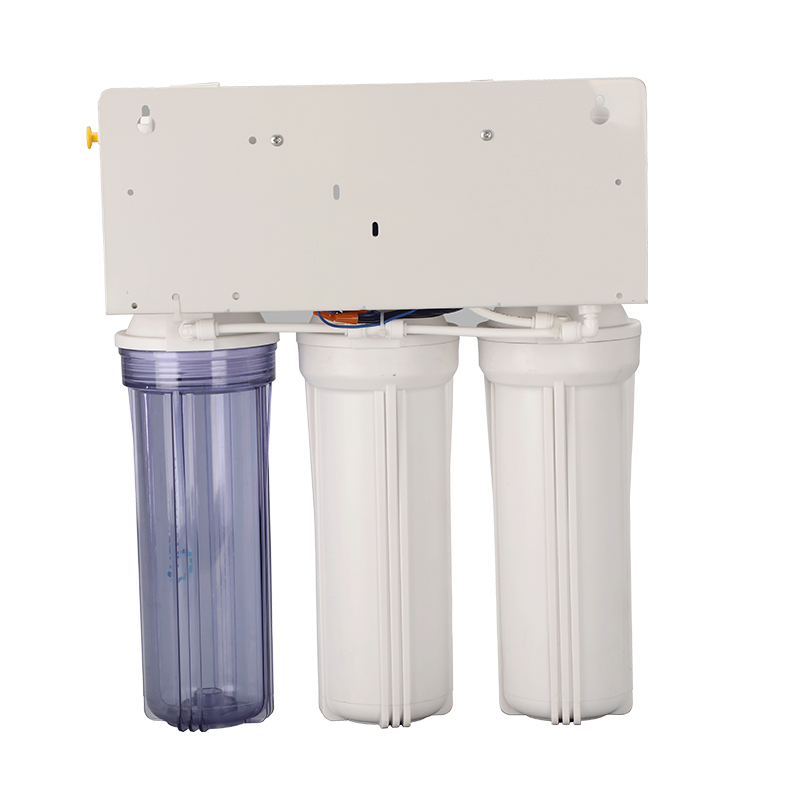
Why RO UV Water Purifier Delivers Unmatched Dual-Stage Protection
How Reverse Osmosis Removes Dissolved Contaminants While UV Neutralizes Microbes
A dual-stage RO UV water purifier combines two independent, complementary barriers: reverse osmosis (RO) for deep chemical purification and ultraviolet (UV) light for precise microbial inactivation. RO forces water through a semipermeable membrane with pores as small as 0.0001 micron—about 100 times smaller than a typical bacterium—physically rejecting ~98–99% of dissolved solids, including heavy metals, nitrates, PFAS, and total dissolved solids (TDS). This stage also removes compounds that impair taste, odor, and clarity. However, RO alone cannot guarantee complete pathogen elimination: some viruses may pass through intact, and post-membrane contamination or biofilm regrowth remains possible. That’s where UV-C light at 254 nm steps in. It disrupts microbial DNA and RNA, preventing replication. When calibrated to deliver a validated dose of 40 mJ/cm², UV achieves ≥4-log (99.99%) inactivation of bacteria, viruses, and protozoa—exceeding U.S. EPA and FDA CFR-21 benchmarks for drinking water safety. A 2023 Global Water Intelligence study found RO-equipped treatment systems reduced product recall incidents by 83% compared to single-stage filtration alone. Together, RO and UV deliver comprehensive protection: one removes dissolved threats at the molecular level; the other neutralizes live pathogens without chemicals or residuals.
Superiority Over Single-Technology Systems: Taste, Safety, and Regulatory Compliance
Single-technology purifiers inherently compromise on scope. Activated carbon filters improve taste and reduce chlorine but leave dissolved heavy metals, nitrates, and salts untouched. UV-only systems sterilize microbes yet offer zero removal of TDS, PFAS, fluoride, or metallic ions—leaving water chemically unrefined and potentially unsafe or unpalatable. In contrast, the dual-stage RO UV design closes both gaps: RO reduces TDS and eliminates earthy/metallic tastes, while UV adds a final, chemical-free microbial safeguard. This synergy also streamlines regulatory compliance. Commercial bottlers, food-service operators, and healthcare facilities must meet stringent standards—including NSF/ANSI 58 (for RO), NSF/ANSI 55 (for UV), and FDA CFR-21—which require both verified contaminant reduction and pathogen control. Facilities using integrated RO UV systems report fewer microbiological test failures, improved batch consistency, and stronger audit readiness. The result is demonstrably safer water, superior sensory quality, and operational confidence no single-stage system can match.
Reverse Osmosis: The Core of Deep Purification in RO UV Water Purifier Systems
Reverse osmosis is the foundational chemical barrier in a dual-stage RO UV water purifier. It removes dissolved contaminants that UV light cannot address—preparing water not only for safe consumption but also for optimal UV performance.
RO Membrane Performance: >99% Rejection of Heavy Metals, Nitrates, PFAS, and Total Dissolved Solids
High-performance thin-film composite (TFC) RO membranes reject over 99% of dissolved contaminants—including lead, arsenic, cadmium, fluoride, nitrates, PFAS, and total dissolved solids (TDS)—by exploiting size, charge, and solubility differences. Water molecules pass through pores ~0.0001 micron wide under pressure, while ions, larger molecules, and organics (e.g., pesticides, herbicides, antibiotics) are retained and flushed away via crossflow. Unlike sediment or carbon filters, RO operates at the ionic and molecular level, making it uniquely effective against contaminants that dissolve completely in water. A 2023 review of RO membrane performance confirms TFC elements routinely exceed 99% TDS rejection under standard conditions. This deep reduction not only lowers health risks and improves taste but also enhances downstream UV efficacy: by removing turbidity-causing particles and organic matter, RO maximizes UV transmittance—ensuring consistent, reliable disinfection.
Critical Pre-Filtration Requirements for RO Longevity and UV Efficiency
Effective RO operation—and sustained UV performance—depends entirely on robust pre-filtration. A sediment filter (typically 5–10 microns) removes sand, rust, and silt that could scratch or clog the delicate RO membrane. An activated carbon block then adsorbs chlorine, chloramine, and volatile organic compounds (VOCs)—protecting the membrane from oxidative degradation and eliminating precursors to taste/odor issues. Without these stages, membrane fouling accelerates, rejection rates drop, operating pressure rises, and service life shortens significantly. Crucially, pre-filtration also supports UV efficiency: clear, low-turbidity water ensures high UV transmittance (UVT), allowing the 254 nm light to penetrate fully and deliver its intended germicidal dose. Replacing sediment and carbon cartridges every 6–12 months—as recommended by manufacturers—is non-negotiable for maintaining both RO integrity and UV reliability.
Ultraviolet Sterilization: Precision Microbial Inactivation in RO UV Water Purifier Units
UV-C Light at 254 nm: DNA/RNA Disruption Mechanism and Log-4+ Pathogen Reduction
In an RO UV water purifier, UV-C light serves as the final, fail-safe microbial barrier—activated only after RO has removed particles, organics, and dissolved contaminants that could shield pathogens or absorb UV energy. At 254 nm, UV-C photons are strongly absorbed by nucleic acids in bacteria, viruses, and protozoa. This absorption creates thymine dimers in DNA and uracil dimers in RNA, halting replication and rendering pathogens non-infectious. A properly engineered UV chamber delivering a validated 40 mJ/cm² dose achieves ≥4-log (99.99%) inactivation of common waterborne pathogens—including E. coli, Giardia, and MS2 coliphage—per the U.S. EPA UV Disinfection Guidance Manual (2006). Critically, UV adds no chemical residual, produces no regulated disinfection byproducts (DBPs), and alters neither pH nor mineral content—making it ideal for well water, stored water, and post-RO applications where biofilm regrowth is a known risk.
System Design Essentials: Quartz Sleeve Clarity, Lamp Intensity, Flow Rate, and Dose Calibration
Reliable UV disinfection hinges on four interdependent design factors:
- Quartz sleeve clarity – Mineral scale, iron deposits, or biofilm on the quartz sleeve can absorb or scatter UV-C light, drastically reducing transmittance. Regular cleaning preserves optical clarity.
- Lamp intensity – UV output declines steadily over time—even if the lamp remains visibly lit. Annual replacement is essential to maintain target dose.
- Flow rate – Higher flow reduces exposure time. Integrated flow restrictors and automatic shutoffs ensure dwell time stays within validated parameters.
- Dose calibration – Real-time UV intensity sensors, validated hydraulic flow patterns, and third-party dose modeling confirm the system delivers ≥40 mJ/cm² across all operating conditions.
Because RO produces exceptionally clear water, UV performance in RO UV systems is highly predictable—provided pre-filtration remains effective and maintenance schedules are followed. Routine checks of sleeve clarity, lamp status, and flow stability keep microbial inactivation consistently robust.
Real-World Performance and Maintenance Best Practices for RO UV Water Purifier Users
Real-world performance of an RO UV water purifier depends on feed water quality, system design, and disciplined maintenance—not just specifications on paper. Typical flow rates range from 0.3–0.8 gallons per minute (GPM) for countertop models, 0.5–1 GPM for standard under-sink units, and up to 2 GPM for premium commercial-grade systems. After installation, users should sanitize the system per manufacturer instructions, flush new membranes and cartridges thoroughly, and record baseline measurements: TDS (pre- and post-RO), chlorine residual (if applicable), and—if testing is available—microbiological indicators.
Declining TDS rejection, reduced flow, or persistent off-tastes signal early-stage issues: clogged sediment or carbon filters, exhausted carbon blocks, or beginning membrane fouling. Consistent maintenance prevents escalation and sustains both safety and cost-efficiency. Replace sediment and carbon filters every 6–12 months, the RO membrane every 2–5 years (depending on feed water hardness, chlorine levels, and daily usage), and the UV lamp annually—regardless of visible function. Sanitize the system after each filter change using citric acid or a diluted bleach solution (followed by thorough flushing). Maintain a log with dates, TDS readings, and part replacements. Use only OEM or certified-equivalent components to preserve warranty coverage, prevent leaks, and ensure dimensional and performance compatibility. Annual UV lamp replacement is especially critical: lamps lose up to 40% intensity within 12 months, and undetected decay can silently erode pathogen inactivation below the required log-4 threshold.
Frequently Asked Questions
What makes RO UV water purifiers better than single-technology systems?
RO UV water purifiers combine reverse osmosis for removing dissolved contaminants and UV light for microbial inactivation, offering comprehensive protection. Unlike single-technology purifiers, they ensure water is both chemically purified (removing TDS, heavy metals, nitrates, and more) and free from live pathogens.
How does reverse osmosis work in an RO UV water purifier?
Reverse osmosis in these systems uses a semipermeable membrane with extremely small pores (0.0001 micron) to remove dissolved solids, heavy metals, nitrates, and other contaminants. It also improves water taste and clarity.
What is the purpose of the UV-C light in an RO UV water purifier?
UV-C light targets bacteria, viruses, and protozoa, disrupting their DNA and RNA to prevent their replication and survival. This completes the purification process by delivering chemical-free disinfection.
How often should I maintain an RO UV water purifier?
Sediment and carbon filters should generally be replaced every 6–12 months. The RO membrane typically lasts 2–5 years but should be checked regularly for performance. The UV lamp requires replacement annually to maintain optimal germicidal intensity.
What are the benefits of using a dual-stage system for water purification?
A dual-stage system ensures better taste, superior safety, and regulatory compliance. The combination of RO and UV guarantees thorough chemical purification alongside effective microbial inactivation for safer and better-tasting water.
Table of Contents
- Why RO UV Water Purifier Delivers Unmatched Dual-Stage Protection
- Reverse Osmosis: The Core of Deep Purification in RO UV Water Purifier Systems
- Ultraviolet Sterilization: Precision Microbial Inactivation in RO UV Water Purifier Units
- Real-World Performance and Maintenance Best Practices for RO UV Water Purifier Users
-
Frequently Asked Questions
- What makes RO UV water purifiers better than single-technology systems?
- How does reverse osmosis work in an RO UV water purifier?
- What is the purpose of the UV-C light in an RO UV water purifier?
- How often should I maintain an RO UV water purifier?
- What are the benefits of using a dual-stage system for water purification?