
 EN
EN
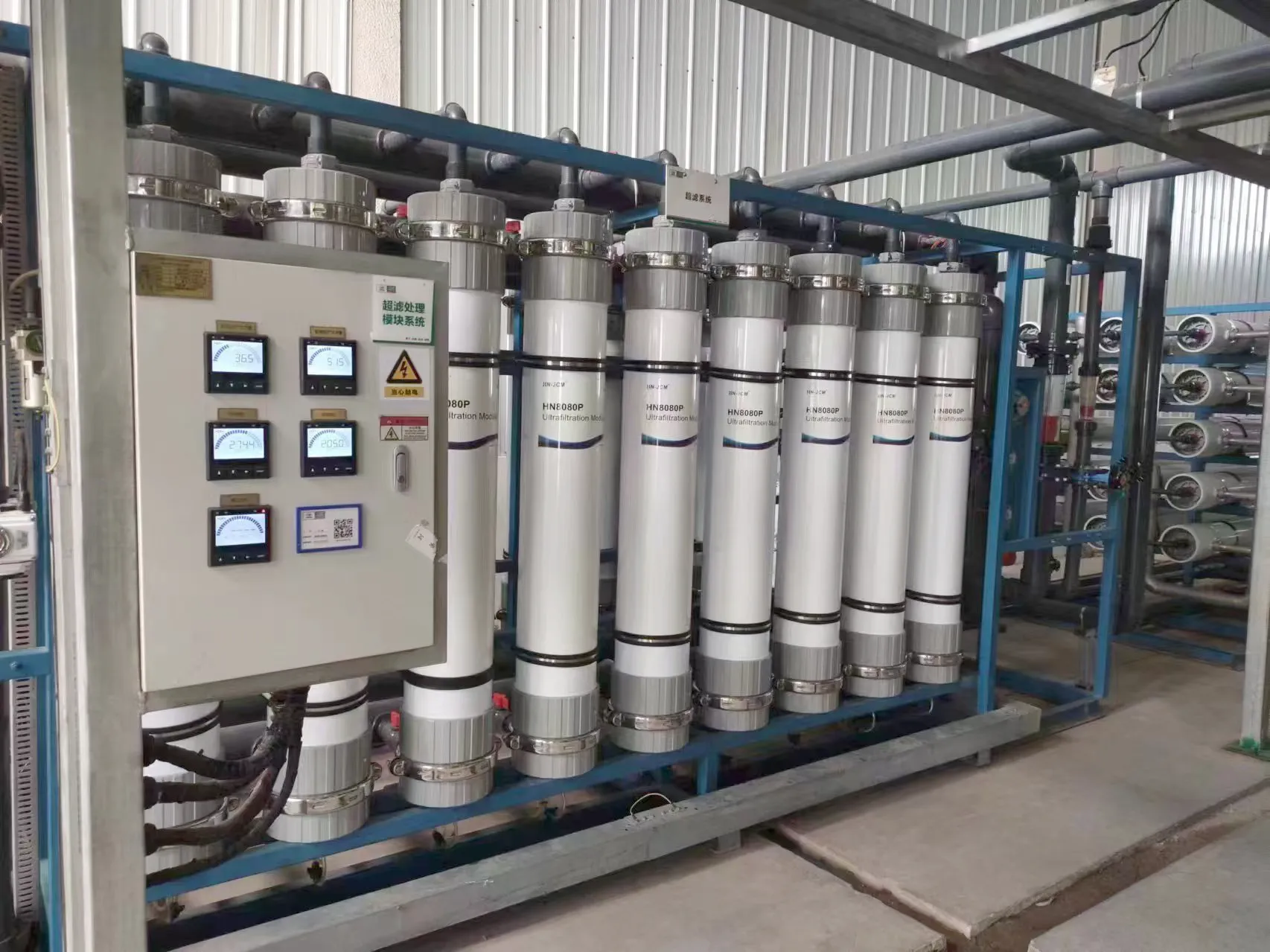
Entering new international markets with residential reverse osmosis (RO) membrane elements requires navigating a complex matrix of safety, performance, and material safety standards. Because RO membranes directly process drinking water, regional regulators require independent proof that elements effectively remove contaminants without leaching harmful compounds into the water supply.
Understanding international certification frameworks is essential for water treatment manufacturers, distributors, and system integrators. Aligning product designs with North American, European, and Asia-Pacific standards ensures smoother customs clearance, faster market adoption, and strong consumer confidence.
Performance and Material Integrity in North America
In North America, NSF/ANSI standards serve as the baseline benchmark for point-of-use drinking water treatment systems. Achieving compliance with these consensus-based standards proves that a membrane element consistently purifies water over its operational lifespan while using completely safe, inert components.
Performance Verification via NSF/ANSI 58
NSF/ANSI Standard 58 is the primary standard governing residential reverse osmosis systems. It focuses on validating health-related contaminant reduction claims under standardized challenge conditions. Certification involves testing a complete point-of-use assembly—including the thin-film composite (TFC) membrane element, sediment pre-filters, and pressurized storage tank.
During a rigorous 16-week challenge test involving thousands of liters of challenge water, testing laboratories evaluate how efficiently the membrane rejects dissolved solids and harmful impurities. Key evaluation targets include:
-
Heavy Metals: Dissolved lead, copper, hexavalent chromium, and arsenic.
-
Inorganic Chemicals: Nitrates, nitrites, and fluorides.
-
Biological Hazards: Parasitic cysts such as Giardia and Cryptosporidium.
-
Total Dissolved Solids (TDS): Overall salt rejection efficiency and permeate recovery rates.
Demonstrating compliance with NSF/ANSI 58 assures buyers that a membrane element will consistently deliver high TDS rejection and clean water output throughout its service life.
Chemical Safety and Extraction Limits via NSF/ANSI 61
While Standard 58 evaluates what a membrane removes, NSF/ANSI Standard 61 evaluates what a membrane might accidentally add. This standard governs the chemical safety of every wetted material inside the system, including polymer sheets, polysulfone support layers, tricot spacers, central core tubes, and assembly adhesives.
Testing involves soaking wetted materials in aggressive water formulations to check for chemical leaching. Laboratories analyze permeate samples for organic chemical extractables, volatile organic compounds (VOCs), phthalates, and heavy metals. Passing Standard 61 proves that components will not impart unpleasant tastes, odors, or toxic chemical traces into purified drinking water. Holding dual NSF/ANSI 58 and 61 certification provides the comprehensive safety profile required by major distributors across the United States and Canada.
Evolving Material Regulations Across the European Union
Exporting residential RO membrane elements to Europe requires compliance with unified EU regulations as well as individual national water authorities. The regulatory landscape in Europe emphasizes strict substance control and complete traceability of food-contact polymers.
Chemical Restrictions and the EU Drinking Water Directive
At the foundational level, Framework Regulation EC No. 1935/2004 dictates that materials coming into contact with drinking water must not release chemical constituents in quantities that threaten human health. Additionally, European chemical regulations under REACH strictly limit Substances of Very High Concern (SVHC) in manufacturing processes. Solvents, plasticizers, and cross-linking agents used in thin-film membrane chemistry must be completely documented and free of restricted substances.
The recast EU Drinking Water Directive (EU 2020/2184) introduced harmonized hygiene standards across all member states. This framework established a centralized European Positive List of approved starting substances for synthetic polymers. Manufacturers must now maintain full raw material traceability and submit products to third-party migration testing to guarantee that polymer breakdown products do not enter the drinking water stream.
Country-Specific Approvals: WRAS and ACS
While broader EU directives harmonize chemical baselines, individual European countries enforce local compliance pathways for plumbing and water supply components:
-
WRAS Approval (United Kingdom): The Water Regulations Advisory Scheme tests non-metallic components to ensure they do not cause water waste, undue consumption, or contamination. WRAS certification evaluates material toxicity and micro-biological growth support, making it essential for residential installations in England, Wales, and Scotland.
-
ACS Attestation (France): The Attestation de Conformité Sanitaire is a mandatory health conformity certificate required for any equipment contacting drinking water in France. ACS testing evaluates organoleptic properties (taste and odor) alongside strict organic carbon migration limits.
Securing WRAS and ACS approvals unlocks access to two of Western Europe's largest residential water treatment markets.
Regional Certification Frameworks in the Asia-Pacific Region
The Asia-Pacific region presents diverse market requirements, with individual countries enforcing mandatory national standards to protect public health and manage domestic water quality challenges.
Mandatory Compliance in India via BIS IS 16240
India’s municipal water supplies frequently contend with high total dissolved solids, seasonal turbidity swings, and biological contamination. To regulate the point-of-use market, the Bureau of Indian Standards enforces mandatory BIS IS 16240 certification for residential reverse osmosis membrane elements.
BIS IS 16240 establishes strict performance baselines for salt rejection, permeate recovery, structural burst pressure, and overall membrane integrity. Foreign manufacturers must undergo factory audits and submit membrane modules to accredited Indian laboratories for verification. Without valid BIS certification, residential RO elements cannot clear customs or be sold legally within the country.
Standardized Performance Testing in Japan via JIS K 0101
Japan enforces a highly technical approach to drinking water safety, guided by Japanese Industrial Standards (JIS). Standard JIS K 0101 details official testing methods for industrial and residential water quality, establishing rigorous protocols for measuring TDS removal, trace element rejection, and microbial control.
Japanese importers and system builders demand test reports from accredited laboratories confirming that RO membranes maintain ultra-tight pore integrity and consistent flow dynamics under fluctuating inlet pressures. Adhering to JIS test protocols is a core requirement for establishing credibility in Japan's premium home appliance market.
Summary of Key Global Certification Standards
| Certification / Standard | Geographic Region | Primary Regulatory Focus | Key Compliance Benefit |
| NSF/ANSI 58 | North America | Contaminant reduction & TDS rejection performance | Essential for US & Canadian market entry |
| NSF/ANSI 61 | North America | Health safety of wetted materials & chemical leaching | Proves material safety and non-toxicity |
| EU 2020/2184 | European Union | Harmonized hygiene requirements & substance lists | EU-wide market access compliance |
| WRAS | United Kingdom | Material safety & water contamination prevention | Preferred by UK utilities and installers |
| ACS | France | Organoleptic testing & organic carbon migration | Mandatory for French market sales |
| BIS IS 16240 | India | Salt rejection, recovery rates & structural integrity | Mandatory requirement for customs clearance |
| JIS K 0101 | Japan | Standardized analytical methods for water quality | Key credential for Japanese OEM integration |
Reliable Manufacturing and OEM Capabilities by Hynamo Water
Navigating global regulatory frameworks requires an experienced manufacturing partner with deep material expertise and robust quality controls. As a trusted developer of high-performance reverse osmosis membrane elements, Hynamo Water engineers residential, commercial, and industrial filtration solutions built to exceed international standards.
With vertically integrated manufacturing facilities, advanced thin-film composite casting technology, and comprehensive OEM/ODM customization services, Hynamo Water delivers certified, high-rejection membrane elements tailored to the regulatory and commercial needs of global partners.