
 EN
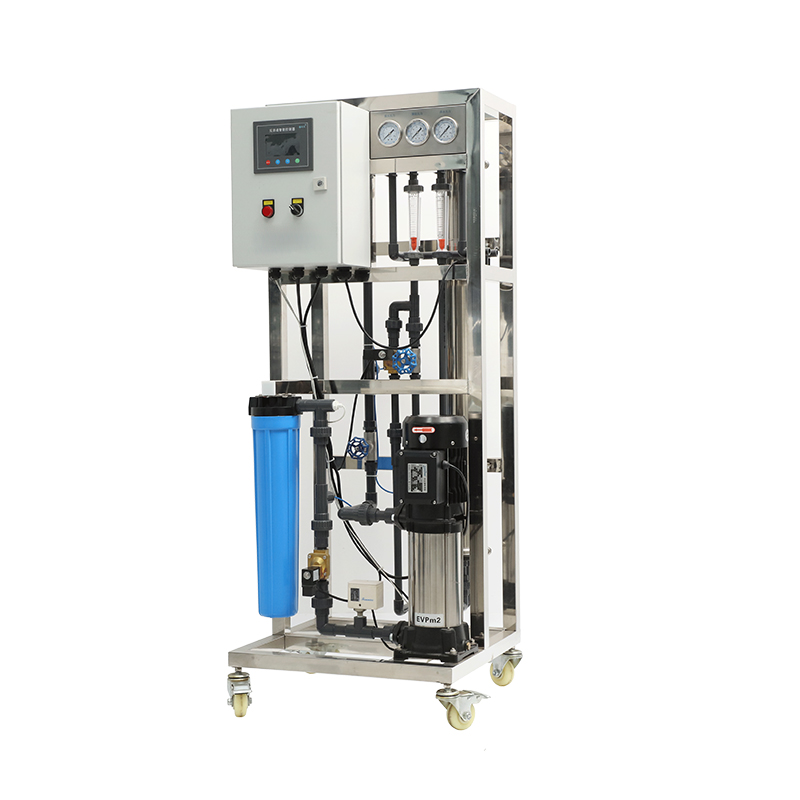
Localized Technical Support and Remote Diagnostics
Bridging the Global Trust Gap with Real-Time Remote Assistance
A reliable water filter supplier bridges the global trust gap by embedding remote diagnostic capabilities directly into filtration systems. Pressure sensors, flow meters, turbidity probes, and total dissolved solids (TDS) monitors continuously capture operating data and transmit it securely—via cellular or cloud channels—to a centralized support platform. Analytical algorithms compare live readings against historical baselines to detect anomalies such as rising differential pressure, falling permeate flow, or declining membrane rejection rates. Early fault detection enables proactive intervention before breakdowns occur—critical when local technical expertise is scarce.
When thresholds are exceeded, the platform automatically alerts regional service engineers, who can launch video-assisted troubleshooting sessions with the buyer’s on-site technicians. Fault codes guide step-by-step resolution—whether backwashing, chemical cleaning, or cartridge replacement—while the same system tracks warranty status and maintenance history for every unit. This remote-first model eliminates unnecessary international service visits and reduces downtime from days to hours. For overseas buyers, it transforms after-sales support from a distant warranty promise into measurable, real-time reliability.
Onboard Diagnostics and Multilingual Support for EU and ASEAN Markets
Effective localization extends beyond translation—it integrates regulatory compliance, interface design, and operational clarity. Onboard diagnostic modules display intuitive error and maintenance codes directly on local control panels, minimizing operator uncertainty. In EU markets, interfaces support English, German, French, Spanish, and Italian; in ASEAN, Thai, Vietnamese, Bahasa Indonesia, and Malay are essential. These modules comply with EU Low-Voltage and Electromagnetic Compatibility (EMC) Directives and embed GDPR-aligned data privacy safeguards.
Multilingual remote support teams operate during overlapping business hours across time zones. Local-language technical documentation, video guides, and bilingual spare parts labels further accelerate resolution. Diagnostic codes are standardized across product lines—enabling local technicians to interpret them without factory training. According to 2023 supply chain benchmarks, this level of regional adaptation cuts mean time to repair (MTTR) by double-digit percentages compared with English-only support.
Guaranteed Replacement Filter Availability Worldwide
Tiered Regional Distribution Hubs for 90-Day Guaranteed Lead Times
Tiered regional distribution hubs ensure predictable replacement filter availability despite global volatility. Leading suppliers maintain primary hubs in major free-trade zones—Rotterdam, Singapore, Jebel Ali, and Long Beach—backed by agile cross-dock sites. This structure guarantees delivery within 90 days, even during port congestion or seasonal demand surges. Per 2023 logistics benchmarks, regional inventory placement reduces lead time variability by up to 40% versus single-country warehousing.
The hub model also segments safety stock: high-velocity SKUs—including 10-inch carbon block and RO membrane filters—are pre-positioned where demand is strongest. Cloud-based inventory visibility allows buyers to reserve units before L/C or wire transfer clearance. A robust service-level agreement (SLA) defines replenishment triggers, air-freight escalation thresholds, and enforceable penalties for missed 90-day windows—converting guaranteed availability from marketing language into an auditable, contractual commitment.
Cross-Compatibility Standards to Reduce Inventory Complexity for Buyers
Cross-compatibility standards simplify procurement and lower total cost of ownership. A proactive supplier documents dimensional and performance equivalency for common cartridges—10-inch, 20-inch, and 40-inch lengths with 222 O-ring, 226 O-ring, or double open-end connections. This prevents duplicate SKUs and reduces buyers’ carrying costs by 15–20%, per 2023 supply chain surveys.
Suppliers should publish pressure drop, micron rating, and material compatibility data so procurement teams can consolidate orders without waiting for engineering validation. Field-replaceable filter heads and standard mounting brackets further streamline stocking for overseas distributors and OEM service partners—ensuring consistency across installations and reducing spare parts fragmentation.
Transparent, Region-Adapted Warranty Coverage
A reliable water filter supplier makes warranty terms explicit before purchase—because overseas buyers operate under divergent legal frameworks and end-user expectations. Written terms must clarify whether coverage is full or limited, which defects are included, and who bears responsibility for shipping, duties, and customs clearance on returned parts.
Global Warranty Frameworks vs. Localized Labor and Duty Compliance
Global warranty frameworks provide baseline coverage for materials and workmanship—but rarely resolve claims efficiently across borders. In the US and EU, written warranties must disclose scope and limitations prior to sale; EU expectations now require digital access to full terms. Buyers should verify whether labor, freight, and import duties for replacements are covered at destination—not just at origin.
Clear policies define exclusions, required claim documentation, turnaround time, and remedy type (repair, replacement, or credit). For example, a “full” warranty may cover parts but exclude local labor or customs handling. Consequential costs—like site downtime or reinstallation—should be addressed upfront. Increasingly, B2B buyers expect B2C-level transparency, especially when reselling to end consumers. Region-adapted coverage avoids disputes by naming authorized local service partners and specifying duty-handling protocols.
Modular, Field-Repairable Design to Extend Effective Warranty Lifespan
Modular, field-repairable design reduces warranty dependence while extending system uptime. Cartridges, seals, sensors, and control valves should be replaceable on-site—without returning the entire unit. This extends effective warranty lifespan: buyers resolve common faults immediately using covered parts, avoiding costly returns and duty assessments.
Ask suppliers whether spare modules are stocked regionally—and whether field repairs performed by trained staff void coverage. Clear, illustrated repair procedures and multilingual video support accelerate claims processing. During supplier evaluation, request a modular parts list and recommended replacement intervals. In practice, this design lowers total cost of ownership long after warranty expiration—turning warranty obligations into a practical, on-the-ground service advantage.
Scalable Service Network: From Certification to Joint-Venture Centers
A reliable water filter supplier builds after-sales reach in deliberate, scalable layers—not through a single overseas call center. The model begins with certified local distributors, evolves to authorized service partners, and matures into joint-venture centers for high-volume buyers. Each tier stocks parts, trains technicians, and handles field-repairable modules—letting overseas buyers expand into new markets without rebuilding service quality from scratch.
Certification is the foundational filter. Local partners must hold current water quality testing accreditation (e.g., ISO/IEC 17025) and meet local electrical, pressure, and safety certification requirements where equipment is installed. Customs clearance and non-tariff barriers remain persistent sources of delay: according to the World Bank Logistics Performance Index 2023, border procedures account for a significant share of supply chain delays in many developing regions. A pre-certified local service hub can reduce clearance-related repair delays by several working days per incident.
| Service tier | Typical capability | Best for | Scalability lever |
|---|---|---|---|
| Certified distributor | Filter replacement, basic water quality spot checks, spare cartridge stock | Small importers, pilot orders | Fast onboarding, low upfront cost |
| Authorized service partner | System repair, multilingual remote diagnostics, regional spare parts | Mid-size buyers, multi-site rollouts | Shared SLAs and local inventory |
| Joint-venture center | Modular field repair, training academy, bonded stock, duty-compliant parts | Large OEM/ODM projects, high warranty exposure | Highest control and lower lifecycle cost |
Progression from certification to joint-venture center should be driven by durable volume, warranty claims density, and duty complexity—not a one-off tender. Suppliers using standardized certification scorecards can scale from a handful of service points to a cohesive regional network within 18–24 months—maintaining consistent replacement filter availability, repair quality, and SLA adherence throughout.
FAQ
Why is remote diagnostics important for water filter systems?
Remote diagnostics enable real-time monitoring and early fault detection, minimizing downtime and eliminating unnecessary international service visits. They allow regional engineers to assist buyers' technicians effectively.
What languages are supported for onboard diagnostics?
Onboard diagnostics in EU markets support English, German, French, Spanish, and Italian, while ASEAN markets include Thai, Vietnamese, Bahasa Indonesia, and Malay.
What guarantees are provided for replacement filter availability?
Leading suppliers offer 90-day guaranteed lead times via tiered regional hubs, ensuring predictable delivery even during global supply chain disruptions.
How do cross-compatibility standards benefit buyers?
Cross-compatibility reduces inventory complexity and costs by documenting dimensional equivalency and performance specifications for common filter cartridges.
What should buyers look for in warranty coverage?
Buyers should look for explicit warranty terms detailing coverage scope, exclusions, documentation requirements, and responsibilities for shipping, duties, and labor.
What is a scalable service network?
A scalable service network evolves from certified distributors to authorized service partners and joint-venture centers, providing progressive levels of support tailored to buyer needs.
Table of Contents
- Localized Technical Support and Remote Diagnostics
- Guaranteed Replacement Filter Availability Worldwide
- Transparent, Region-Adapted Warranty Coverage
- Scalable Service Network: From Certification to Joint-Venture Centers
-
FAQ
- Why is remote diagnostics important for water filter systems?
- What languages are supported for onboard diagnostics?
- What guarantees are provided for replacement filter availability?
- How do cross-compatibility standards benefit buyers?
- What should buyers look for in warranty coverage?
- What is a scalable service network?