
 EN
EN
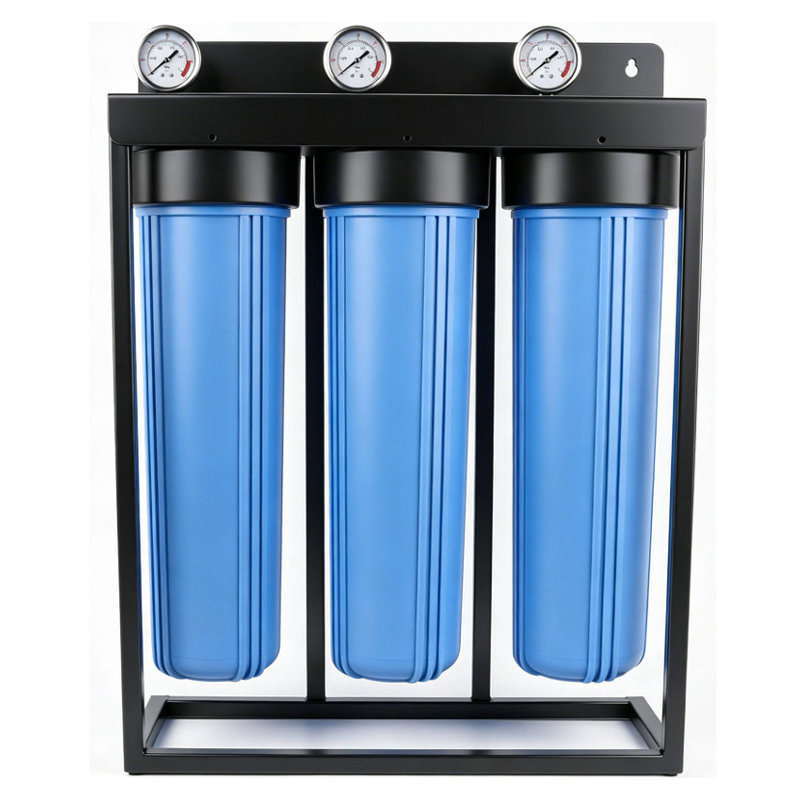
Municipal water treatment facilities rely heavily on free chlorine and chloramines to disinfect drinking water and eliminate waterborne pathogens. However, residual disinfection agents remaining in utility tap water cause noticeable chemical odors, metallic or medicinal off-tastes, and secondary disinfection byproducts (DBPs) like trihalomethanes (THMs).
A high-performance carbon water filter system is the industry standard for removing these volatile compounds and off-flavors. Unlike mechanical particle filtration, activated carbon utilizes advanced surface chemistry—combining physical adsorption with catalytic chemical reduction—to permanently eliminate taste, odor, and residual chlorine at the point of entry or point of use.
Dual Removal Mechanism: Adsorption vs. Catalytic Reduction
The efficacy of a carbon water filter system against odor and chlorine lies in two complementary scientific processes acting on the molecular level.
Physical Adsorption (Odor & VOC Elimination)
Activated carbon is engineered to possess an exceptional surface area—typically ranging from 1,000 to 1,500 square meters per gram. This internal pore network traps organic contaminants through Van der Waals forces:
- Organic Taste and Odor Compounds: Geosmin and 2-methylisoborneol (MIB), produced by algae blooms, cause earthy or musty smells in municipal supplies even at ultra-low concentrations (nanograms per liter).
- Volatile Organic Compounds (VOCs): Industrial runoff, solvents, pesticides, and disinfection byproducts (THMs) lodge securely inside the micro- and mesopores of the carbon block matrix.
- Hydrogen Sulfide: Low-level sulfide compounds causing rotten-egg odors are captured and held within high-grade catalytic carbon media.
Catalytic Chemical Reduction (Chlorine & Chloramine Neutralization)
Free chlorine isn't simply held inside the carbon; it undergoes an active surface chemical reaction.
- Free Chlorine Removal: Hypochlorous acid and hypochlorite ions react directly with active carbon sites. The carbon acts as a reducing agent, converting free chlorine into harmless dissolved chloride ions and small trace amounts of carbon dioxide/oxide surface groups.
- Chloramine Breakout: Monochloramine requires longer contact time (Empty Bed Contact Time, or EBCT) and specialized catalytic carbon with modified surface electron density to accelerate catalytic decomposition into ammonia, nitrogen gas, and chloride ions.
Coconut Shell vs. Bituminous Coal Carbon Media
The origin material of the activated carbon determines the pore structure density, directly influencing odor trapping efficiency and mechanical longevity.
| Media Parameter | Coconut Shell Activated Carbon | Bituminous Coal Carbon | Wood-Based Carbon |
|---|---|---|---|
| Pore Distribution Focus | Dominant Micropores (< 2 nm) | Balanced Meso- & Macropores (2–50 nm) | Dominant Macropores (> 50 nm) |
| Chlorine Reduction Efficiency | Superior (High micropore surface area) | Moderate | Moderate to Low |
| Trace Odor/VOC Capture | Exceptional (Ideal for geosmin & H₂S) | Good for larger organic molecules | Poor for small gas molecules |
| Ash Content & Purity | Very Low (< 3%) | Higher (8–15%) | Variable |
| Hardness & Abrasion Resistance | Extremely High (Minimal fines generation) | Moderate | Low (Prone to crumbling) |
| Primary Engineering Application | POU Drinking Water & Premium POE Filters | Industrial Pre-treatment / Wastewater | Large Organics Decolorization |
Form Factor Selection: Carbon Block (CTO) vs. Granular Activated Carbon (GAC)
Choosing between Carbon Block (CTO) and Granular Activated Carbon (GAC) determines the hydraulic flow profile, bypass risk, and chlorine contact performance.
Granular Activated Carbon (GAC)
- Design: Loose carbon granules inside a cartridge or vessel.
- Pros: Low initial pressure drop, high continuous flow rate capacity (GPM).
- Cons: Prone to fluid channelling—water creates paths of least resistance through loose granules, bypassing carbon contact sites and allowing residual chlorine/odor breakthrough over time.
Extruded Carbon Block (CTO)
- Design: Fine coconut shell carbon particles bound with food-grade binder (such as UHMW-PE) and extruded under high temperature and pressure.
- Pros: Uniform pore density (0.5–5.0 microns) completely eliminates water channelling. Serves a dual role as both a mechanical sediment filter and a high-efficiency chemical adsorber.
- Cons: Higher initial differential pressure; requires clean pre-filtration (5-micron sediment spun polypropylene) to prevent surface blinding from silt or rust.
Engineering & OEM Manufacturing Benchmarks
To meet international municipal standards and private-label retail specifications, a commercial carbon water filter system must fulfill rigid manufacturing and testing protocols:
- Iodine Number Standard: Ensure raw media reflects an Iodine Number of 1000 mg/g or higher, confirming maximum available internal micropore surface area for halogen and volatile compound adsorption.
-
Certification Compliance:
- NSF/ANSI 42: Verified performance claims for Aesthetic Effects (Chlorine, Nominal Particulate, Taste, and Odor reduction).
- NSF/ANSI 61 & FDA Title 21: Structural integrity and extraction safety for food-contact plastics and binders.
- Contact Time Optimization: Ensure point-of-entry vessel dimensions provide an Empty Bed Contact Time (EBCT) of at least 1.5–2.0 minutes for chlorine and over 3 minutes for chloramine decomposition at peak flow rates.
- Quality Control & Testing: Factory batch testing must evaluate differential pressure, burst pressure safety (300+ psi hydrostatic tests), and initial carbon fine flush volumes.
For complete custom OEM product ranges, wholesale cartridge specifications, and modular filtration architectures, visit our comprehensive pillar hub.